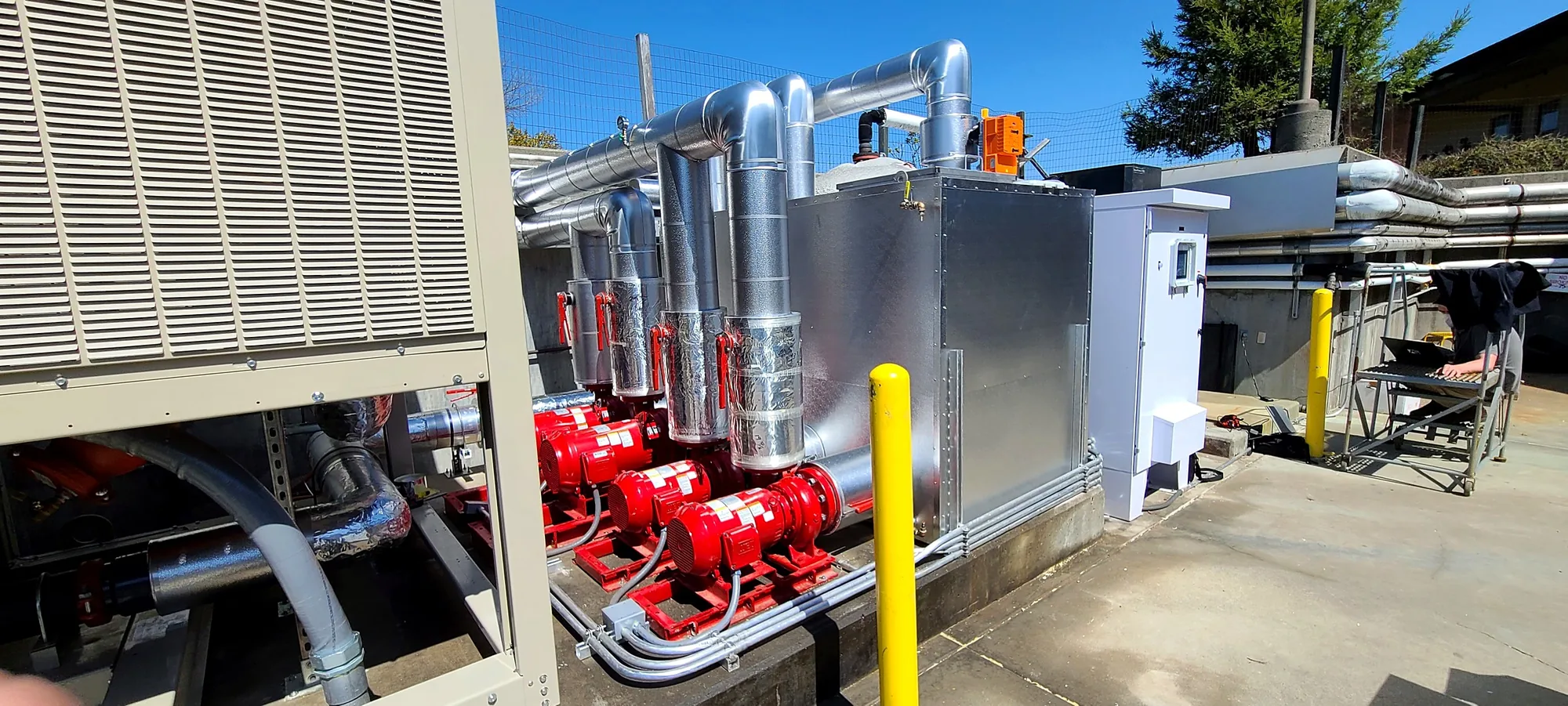
We troubleshoot, repair and maintain Glycol Chillers across Sonoma and Napa counties. We also design and install Chillers, Glycol Piping, Pumps and Controls sized for your operating temperatures and production needs.
We inspect the Chiller, Glycol Pumps, Piping and Controls to find the cause of cooling loss or alarms. We service Chillers at wineries, food and beverage plants and manufacturing facilities, including systems installed by others. We also repair Cooling Towers and evaporative Condensers, including Float faults, clogged basin Strainers and Condenser Pump problems.
Year-Round Chiller Maintenance
We recommend year-round maintenance, not just a check before harvest. Visits cover the Chiller, Pumps and glycol, Condensers and refrigerant leak inspections.
Chiller Installation & System Upgrades
We size Chillers, Pumps and Glycol Piping together for new facilities, replacements and expansions.
Planning a Replacement or Expansion?
We check connections to your existing system and plan installation around site access and shutdown time.
Chiller Service Calls
Chiller Circuit Surging and Chattering
Problem: A Glycol Chiller’s second circuit was surging and its Solenoid Valve was chattering.
Repair: We found a failed Solenoid Coil and a TXV Powerhead that had lost its charge, and replaced both. The Solenoid Valve still would not open properly, so we replaced the Solenoid Valve assembly, adjusted the refrigerant charge, cycled the circuit and rechecked the refrigerant readings.
Verified outcome: Full liquid-line sight glass, 15°F subcooling and the Chiller back at 100% capacity.
Chiller Cycling On and Off
Problem: A Chiller kept cycling on and off.
Repair: We corrected a low refrigerant charge and the superheat, and cleaned the Condenser. We then traced an intermittent loss of control power to an overheating Transformer, removed unused Control Modules that were still drawing power, and cycled the Chiller several times.
Verified outcome: Electrical fault corrected and the Chiller working correctly.
Common Questions
How often should a commercial Glycol Chiller be serviced?+
It depends on the equipment and how hard it runs. Most Chillers need 2 to 4 visits a year, year-round, and we set the schedule in your Maintenance & Service Agreement.
What maintenance does a Process Chiller need?+
A maintenance visit checks the Condenser Coils and Fans, refrigerant pressures, superheat and subcooling, and the Compressors, Contactors and electrical connections. On the glycol side, we test concentration, check level, Pumps and Strainers, purge air, and test the safety switches, flow switch, sensors and alarms.
Why is my Glycol Chiller running but not cooling?+
It’s usually not enough glycol flow (failed Pump, clogged Strainer, air or a closed Valve), a dirty Condenser, a refrigerant problem such as a leak, or a load bigger than the Chiller can handle. We compare temperatures, flow and operating pressures to find which one before recommending a repair.
How is a Process Chiller sized?+
We size it from your cooling load, temperatures and flow, and confirm it during the quote.
What temperature should a Glycol Chiller be set at?+
Set it for what your Tanks and process need, not lower. The glycol mix must protect well below your lowest setpoint; if the setpoint gets close to the mix’s freeze point, or glycol flow drops, the Heat Exchanger can freeze and crack. A lower setpoint does not add cooling capacity. Lower operating temperatures can reduce available Chiller capacity. Follow the equipment manufacturer’s requirements for glycol concentration and flow.
Why does a Glycol Chiller freeze up?+
A glycol mix that is too weak, or flow that drops too low, lets ice form inside the Evaporator or Heat Exchanger even when the Tanks look fine. We check concentration, flow and setpoint before putting the Chiller back in service.